Showing posts with label books. Show all posts

20 May 2014

Drinkable book

Official world wide release for EMBRACED BY FIRE.
This means it'll be available print & eBook from retailers other than Amazon, so non-Amazonians now's your chance :)


Now on with our scheduled program...

Over the years I've linked to some very fancy books:
Books as fashion
Crazy designs - like a recipe book printed on sheets of fresh pasta
Edible books
A 16th century book that opened 6 ways

But this next book though is something special. It provides safe drinking water. The book itself is a guid to safe drinking water - the kicker - the pages can be removed and used as filters, thus creating safe drinking water. Water is Life is a charity organisation that focuses on safe drinking water in the developing world. This book is a project that seeks to combine an educational resource with a practical tool.

How does it work: "Each page is impregnated with silver nanoparticles (which gives the paper its distinctive orange colouring). The nanoparticles don't quite work like a traditional filter. Rather than providing a barrier, they actually kill the bacteria as they pass through the paper. As the water runs through, the bacteria absorb the silver ions, which kill the bacteria." 

The book has enough pages to last about 4 years (depending on usage). So, next time you take a nice cool drink of water, think about the people who aren't so lucky. Then, raise your glass to the people who are trying to make a difference (or become one of them.)

(Full article here)


05 May 2014

Library Love

According to a recent study going to the library makes us happy. Or rather a happiness money can't buy. How much money? Happiness equivalent to a £1,359 pay rise. A least that's the results of a recent study commissioned by Britain's Department of Culture, Media & Sport. They wanted to know which activities have positive impact on people's wellbeing. 

Another study shows that libraries make help create stronger communities. They are places to socialise, places to learn, and they are often physically in the heart of a community. 

With eBooks and the internet gaining in popularity libraries are taking a hit. But we need to remember what they bring to our communities. A place to gather, learn, connect with events and people in out communities. Libraries don't just have fiction and non-fiction books, they have noticeboards, guest speakers, and helpful librarians. 

Librarians you say, but those ladies are scary. So not true. Not only are not all librarians women, they are certainly not scary, they are people who love books and love knowledge and they want to share that with other. Don't believe me, here's a list of 9 reasons librarians are great

Photo: Jesse Fox: Music librarian Steven Kemple

 So the question you need to ask yourself is...have you visited you local library lately?

This blog post sound a bit biased? Well, it would, written by an ex-librarian romance writer bookworm   :)

29 April 2014

The joys of re-reading

This BBC article caught my attention because I am, I so am, a re-reader that is. In fact, right now I’m re-reading several of Linda Howard’s suspense novels.  I’ve got a huge stack of new books just crying out to be read, instead I’m nose deep in old favourites.

So why do it? After all, I know how they end.

Maybe there’s a kind of comfort in knowing how they end… a bit like comfort eating? Maybe in a world that’s always changing around us, there is something about the world between the pages that provides security/ stability/ something to rely on. Maybe it’s finding something new each time, enriching the experience? Maybe it’s something I never grew out of; after all kids love hearing the same stories over and over again? Maybe different people are driven by different motivators?

Not all re-readers are the same. Some re-readers make a ritual of it. People who read ‘Lord of the Rings’ or ‘Pride and Prejudice’ religiously every year at a certain time. This isn’t me; I’m more of a haphazard re-reader. I re-read whatever I feel like, whenever I feel like, no real rhyme or reason. Although I have noticed at times of stress my re-read to new ratio goes up.

The BBC article comments that “Scientists have weighed in, too, citing the mental health benefits of re-reading. Research conducted with readers in the US and New Zealand found that on our first reading, we are preoccupied by the ‘what?’ and the ‘why?’. Second time round, we’re able to better savour the emotions that the plot continues to ignite.”

What ever the reason, books are willing to give up their stories when ever we open their pages :)


11 March 2014

People with books

Some very fun pictures. They might sound simple but in some ways they capture the joy of books.
New York Bookstore manager, Ellen Pullen, has collated an ongoing photo essay on books & the bodies that love them. The images show her and her colleagues posing with the books with which they work. Here is a small sample, see more here.


09 September 2013

Covers Children's vs Adult

Looking at some of the re-designed covers last week made me think of how covers get re-designed when books massively move readership. I'm thinking here of children's books that catch the adult imagination and are then given adult covers as well. This means the books can now easily sit in two places in the book store, and if an adult is reading one, they don't need to feel weird about reading kids books (and not to kids).


Harry Potter is of course the classic cross-over book.

This is probably more YA than true kids book.

Phillip Pulman's Dark Materials is an interesting one because although the main character is a child the author has said the book was never truly targeted at children.

The most recent popular cross-over success

28 May 2013

Book Art

Books are a wonderful. They are a place to escape to, a place to learn, and an outlet for creativity. Sometimes however that outlet is not just for the author - sometimes it's for sculptors. It's true this use of books is not the conventional one, and it's not one of which everyone approves (involving as it does the destruction of the book in its current form).

While I could never use one of my books quite like this, I can't help but admire the creativity of these sculptures. These particular specimens were left anonymously around Edinburgh.


For more + closeups go here

05 June 2012

crazy books

Cook books you can eat, mirror books you can see yourself in, sports books you can play ball with... okay I made the last one up, but the others...

Some books have some very unusual designs:
(more can be found at the link) 
 A recipe book with the recipes printed on sheets of fresh pasta - lasagne a go-go
 The Mirror Book published in 1985 is exactly that, pages of mirrors. It comes complete with a pair of white gloves for smudge-free handling, and it’s meant to be a book about self-discovery: “as one turns the pages, hands are reflected, and on looking closely, our own faces. In the act of turning, the self-image becomes distorted. Here the book is the entrance key to a world of self-contemplation, and, potentially, self-knowledge.”
 This one is made of sugar and printed with vegetable ink. mmmm sugar.
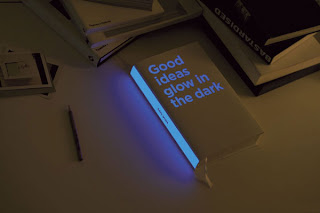
 This is pretty cool, you can only see the text at night. That's right it's glow-in-the-dark, in the light it just looks like a while notebook.
 A direct marketing gimmick to to promote Jungle Book 2, nonetheless they are pretty cool.
 This edition of Edgar Allan Poe’s short story “The Imp of the Perverse,” designed by Helen Friel, must be destroyed to be properly read. Friel explains, “‘The Imp of the Perverse’ discusses the voice inside all of us that makes us to do things we know we shouldn’t do. Each page is perforated in a grid system with sections of the text missing. Readers must follow the simple instructions to tear and fold specific sections to reveal the missing text. Books are usually precious objects and the destruction is engineered to give the reader conflicting feelings, do they keep the book in it’s perfect untorn form? Or give into the imp and enjoy tearing it apart?”
 Each edition of Richard Long’s Nile (Papers of River Muds) is made from the mud of the Mississippi, the Amazon, the Rhine, the Guatiquia, the Huang He, the Hudson, the Nairobi, and other rivers, each page a little different depending on where it was collected.
Snoop Dog, not usually someone I think of when I think of books, has this gem to add. Each page is made from rolling paper. You can tear out a page and roll a cigarette, the pine can be used to strike a match.

21 February 2012

Book Reviews


As a writer I have a love/hate relationship with book reviews. If they love it, I love the review; if they don't... Of course, I'm not only a writer, I'm also a reader. As a reader, reviews can open my eyes to new books & new authors. This review opened my eyes in a most unexpected way...


Unsettling Echoes Of Josef K., March 2, 2010
If '1984' or 'The Trial' had been a children's book, Mr Messy would be it. No literary character has ever been so fully and categorically obliterated by the forces of social control. Hargreaves may well pay homage to Kafka and Orwell in this work, but he also goes beyond them.

We meet Mr Messy - a man whose entire day-to-day existence is the undiluted expression of his individuality. His very untidiness is a metaphor for his blissful and unselfconscious disregard for the Social Order. Yes, there are times when he himself is a victim of this individuality - as when he trips over a brush he has left on his garden path - but he goes through life with a smile on his face.

That is, until a chance meeting with Mr Neat and Mr Tidy - the archetypal men in suits. They set about a merciless programme of social engineering and indoctrination that we are left in no doubt is in flagrant violation of his free will. 'But I like being messy' he protests as they anonymize both his home and his person with their relentless cleaning activity, a symbolism thinly veiled.

This process is so thorough that by the end of it he is unrecognizable - a homogenized pink blob, no longer truly himself (that vibrant Pollock-like scribble of before). He smiles the smile of a brainwashed automaton, blandly accepting what he has been given no agency to question or refuse. It is in this very smile that the sheer horror of what we have seen to occur is at its most acute.

Somewhere behind this blank expression though is a latent anger - a trace of self-knowledge as to what he once was - in the barbed observation he makes to Neat and Tidy that they have even deprived him of his name.

The book ends with a dry reminder from Hargreaves that just as with the secret police in some totalitarian regime, our own small expressions of uniqueness and volition may also result in a visit from these sinister suited agents.

29 November 2011

Writing - it ain't easy

Writing's not always easy, but some writers it harder than others (for some deliberately so). Check out these 10 works that were hard to write...

1. The Story That Will Never Be an e-Book Gadsby by Ernest Vincent Wright

Not to be mistaken for The Great Gatsby, some might call Gadsby a “love” story. But Ernest Vincent Wright wouldn’t have used that word. Instead, he described his novel as a story of “strong liking” and “throbbing palpitation.” That’s because in 1939, Wright gave himself one restriction: He promised to write Gadsby without using the letter E.

Wright wanted to prove that a great author could work around such a restriction and still tell a gripping story. To prevent any stray Es from entering the text, he tied down his typewriter’s E key, and then put his expansive vocabulary to the test. The result is an astounding feat of verbal gymnastics. While vividly describing a wedding scene, Wright manages to avoid the words “bride,” “ceremony,” and even “wedding” (he calls it “a grand church ritual”). To explain away the verbosity of the language, he uses a narrator whose poor command of English and circumlocution even irritates the story’s other characters.
When the book was announced, one skeptic attacked Wright in a letter, claiming that the feat was impossible. “All right,” replied Wright in the book’s intro, “the impossible has been accomplished.” Sadly, Wright didn’t live long enough to revel in Gadsby’s critical acclaim. He died the year the book was published.

2. The Tale Told in the Blink of an Eye The Diving Bell and the Butterfly by Jean-Dominique Bauby

Many authors have struggled through illness and injury to write their masterpieces, but none more so than Jean-Dominique Bauby, editor-in-chief of French fashion magazine Elle. In 1995, at the age of 43, Bauby suffered a major stroke and slipped into a coma. He regained consciousness two days later, but his entire body—with the exception of his left eyelid—was paralyzed.
Still, Bauby was determined to write. Using only his lucid mind and one eye, he began working on his memoir, The Diving Bell and the Butterfly. Each night, he’d lie awake editing and re-editing the story in his mind, memorizing every paragraph as he hoped to relay it. By day, his transcriber would recite the alphabet to him over and over. When she reached a letter Bauby desired, he’d wink. Each word took about two minutes to produce, and during the course of a year, Bauby managed to tell his story of life in paralysis. His moving and often funny prose won critical acclaim, and The Diving Bell and the Butterfly became a bestseller throughout Europe. Sadly, Bauby died of pneumonia in 1997, soon after the first edition was published in France. He missed not only the English translation, but also the award-winning film adaptation released in 2007. 


3. The Poetry of Speed Transcendence-Perfection by Sri Chinmoy

Before his death in 2007, Indian spiritual master Sri Chinmoy wrote at least 1,000 books, 20,000 songs, and 115,000 poems. Some he penned in his mother tongue, Bengali, and some in his second language, English. His poems won numerous awards and inspired countless writers and musicians. And while Sri Chinmoy was clearly a fast writer, he was never as quick as on November 1, 1975, when he wrote Transcendence-Perfection, a collection of 843 poems—all written in 24 hours.

How was Sri Chinmoy so prolific? He believed the key was meditation. As he once explained, “The outer mind is like the surface of the sea. On the surface, the sea is full of waves and surges … But when we dive deep below, the same sea is all peace, calmness and quiet, and there we find the source of creativity.”

4. History’s Greatest Sonnet “Washington Crossing the Delaware” by David Shulman

Etymologist David Shulman was a true lover of words. One of the most prolific contributors to the Oxford English Dictionary, Shulman tracked down the roots of Americanisms for more than 70 years. But those weren’t Shulman’s only contributions to the world. During World War II, he served in the army and used his language skills to crack Japanese codes. His most astonishing feat as a wordsmith, however, occurred in 1936, when he composed the sonnet “Washington Crossing the Delaware.”
What makes the poem so remarkable is that every one of Shulman’s 14 lines is an anagram of the title. What’s more, the lines are rhyming couplets, and they tell a story, more or less. Here’s an excerpt:
A hard, howling, tossing water scene.
Strong tide was washing hero clean.
“How cold!” Weather stings as in anger.
O Silent night shows war ace danger!
As poetry, it isn’t exactly Walt Whitman. But then, Whitman was never this good with anagrams.

5. Six Powerful Words “Baby Shoes” by Ernest Hemingway

According to legend, Ernest Hemingway created the shortest short story ever told. While having lunch at New York City’s famous Algonquin Round Table, Hemingway bragged that he could write a captivating tale—complete with beginning, middle, and end—in only six words. His fellow writers refused to believe it, each betting $10 that he couldn’t do it. Hemingway quickly scribbled six words down on a napkin and passed it around. As each writer read the napkin, they conceded he’d won. Those six words? “For sale. Baby shoes. Never worn.”
While the anecdote may be apocryphal, whoever did write “Baby Shoes” has forced writers forever after to consider the economy of words. Today, the work has inspired countless six-word memoir and story competitions, proving that a story’s brevity is no limit to its power.

6. The Story of Youth The Young Visiters, by Daisy Ashford


Daisy Ashford’s novella about Victorian society is considered something of a classic. First published in 1919, the work is still in print and has been turned into a movie. But if that doesn’t sound remarkable, consider that Ashford was only 9 years old when she wrote it.

To preserve the authenticity of the story, publishers decided to leave in Ashford’s plentiful grammar mistakes and spelling errors (the title, for example). They also added a foreword by Peter Pan author J.M. Barrie to assure readers that this was no hoax. Barrie reminded people that the novel was indeed written by a little girl, who was “hauled off to bed every evening at six.”

7. The Most Visionary Story Ever Told Futility by Morgan Robertson

Occasionally, literature is prophetic. H.G. Wells’ stories, for instance, predicted video recordings, portable television, aerial bombings, and a Second World War starting in 1940 (only one year late). And a 1941 comic book written by Gil Fox described the bombing of Pearl Harbor in surprising detail, precisely one month before it happened.
But perhaps the most meticulously prophetic work of literature is Morgan Robertson’s short and poorly written novel, Futility. In it, Robertson describes the maiden voyage of a British luxury liner called the Titan, which claims to be unsinkable, but sinks anyway after hitting an iceberg. Nearly every detail resembles the story of the Titanic. Of course, nobody thought about that when Futility was released in 1898, a full 14 years before the Titanic set sail.
Futility wasn’t Robertson’s only prescient piece of literature. In 1912, three years before his death, he wrote Beyond the Spectrum. Much like Gil Fox’s tale, Robertson’s story predicted a Japanese sneak attack on an American fleet in Hawaii, and the resulting war between the two countries.

8. Writing by Ear Anguish Languish by Howard L. Chace


Sinker sucker socks pants, apocryphal awry. If those words don’t make sense together, try saying them out loud: “Sing a song of sixpence, a pocketful of rye.” Now imagine a whole book written like this, and you’ve got Howard L. Chace’s 1940 collection of nursery rhymes and fairy tales, Anguish Languish. The work contains classics such as Marry Hatter Ladle Limb and Ladle Rat Rotten Hut, which begins with the immortal line, “Wants pawn term, dare worsted ladle gull hoe lift wetter murder inner ladle cordage.” Although Anguish Languish is playful, there was also a serious side to it. As a French professor, Chace used the stories to illustrate that, in spoken English, intonation is almost as important to the meaning as the words themselves.

9. James Joyce’s Deaf Translation Jam Finnegans Wake by James Joyce

James Joyce wrote his final novel, Finnegans Wake, during a 17-year period in Paris, finishing the work just two years before his death in 1941. During that time, Joyce was nearly blind, so he dictated his stream-of-consciousness prose to his friend, Samuel Beckett. That led to some unexpected results. For example, during one session, Joyce heard a knock at the door, which was too quiet for Beckett to perceive. Joyce yelled to the visitor, “Come in!” so Beckett added “Come in!” to the manuscript. When Beckett later read the passage back to Joyce, the author decided that he liked it better that way.

After several such sessions, Finnegans Wake became one of the most impenetrable works of English literature. But the experience didn’t just affect Joyce’s novel; it seemed to have a lasting effect on Beckett’s writing, as well. Beckett would go on to become a leading playwright in the Theatre of the Absurd, where his characters often spent their entire time on stage sitting in the middle of nowhere, hoping that someone would hear their voice.

10. The Art of Writing by Committee The President’s Mystery Story by Franklin Roosevelt and seven other novelists

Many American presidents have written books, but only Franklin Roosevelt has contributed to a mystery novel. At a White House dinner in 1935, Roosevelt pitched his story idea to author Fulton Oursler. Roosevelt’s tale started like this: A man named Jim Blake is trapped in a stale marriage and a boring job. He dreams of running off with $5 million and starting over with a new identity.
Unfortunately, the President hadn’t worked out one major plot point: How does a man with $5 million disappear without being traced?
To solve the problem, Oursler formed a committee of five other top mystery writers: Rupert Hughes, Samuel Hopkins Adams, Rita Weiman, S. S. Van Dine, and John Erskine. Each author wrote a chapter and ended it with Jim Blake in a terrible situation, which the next author was left to resolve. Despite being the work of a Washington committee, the end result was surprisingly successful. The President’s Mystery Story was serialized in a magazine, published as a book, and even turned into a movie in 1936.
Yet, the writers never came up with a solution to Roosevelt’s original problem. That didn’t happen until 1967, when Erle Stanley Gardner wrote a final chapter to a new edition of the book. In it, the secret to Jim Blake’s mysterious disappearance is discovered by Gardner’s most famous character, Perry Mason.

(Thanks to Metalfloss.com for the list)

14 November 2011

books as fashion

Loved this picture - had to share it :) Reminded me of this post for those who like reading in the, with all the dangers therein.

I've done a few posts with books & fashion, and I just can't stay away from the idea. So, here's a few more images for you. (Thanks to Pattie). Now you can bookorize, or is that accessobook, anyway now you can accessorize with books.


 and handbags...


And the last one is made entirely from Little Golden Books - even the bodice is made from the spines!